Why Multi-Mode Over Single-Mode in Scale-Up AI Data Centers?
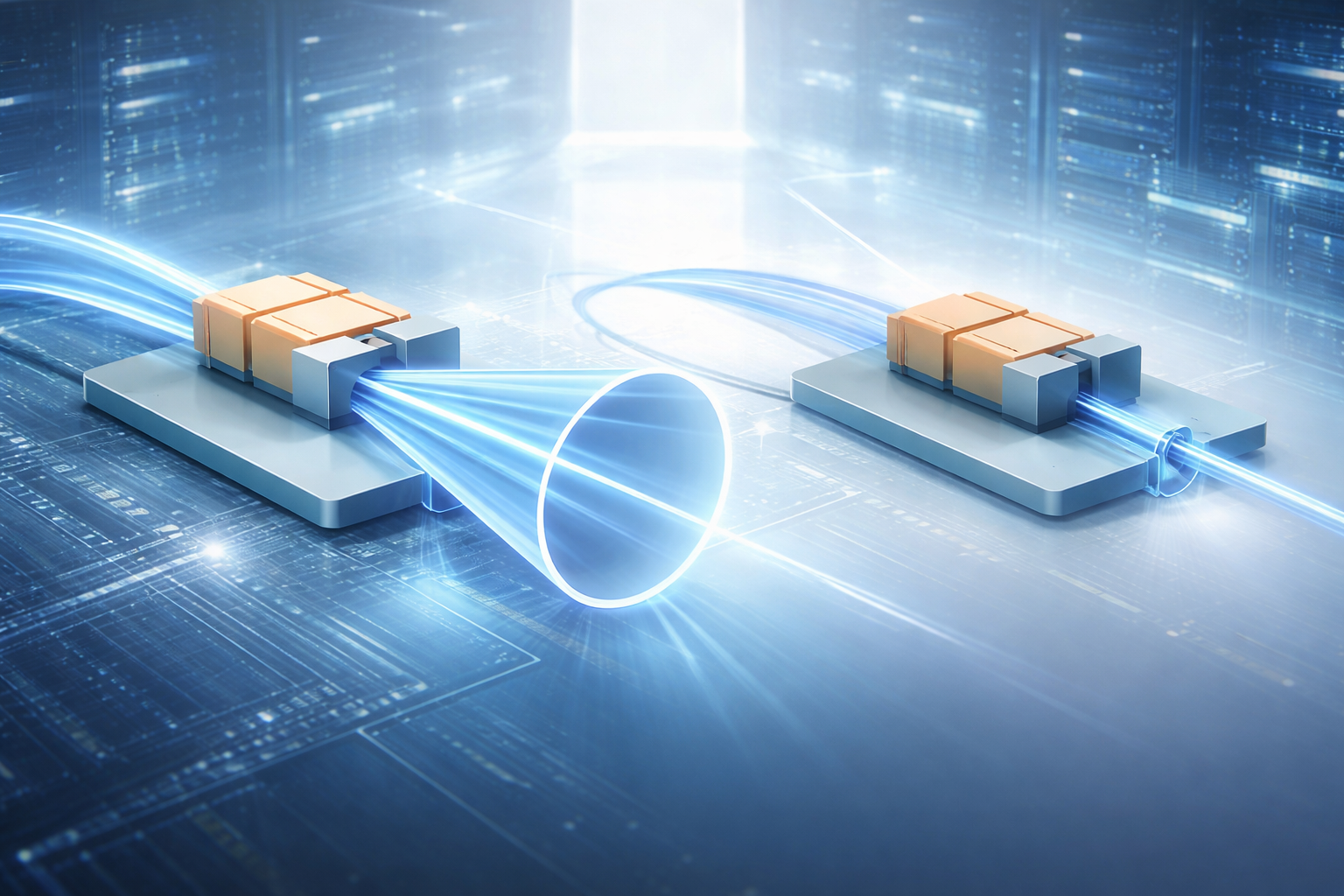
As AI data centers continue to scale, optical interconnect design becomes increasingly important. One of the key technical decisions is whether to adopt multi-mode or single-mode fiber architectures.
RVi has chosen to focus on multi-mode VCSEL-based systems for scale-up AI applications. The reason is rooted in optical physics, manufacturability, and alignment tolerance.
The Optical Physics: Étendue and Light Coupling
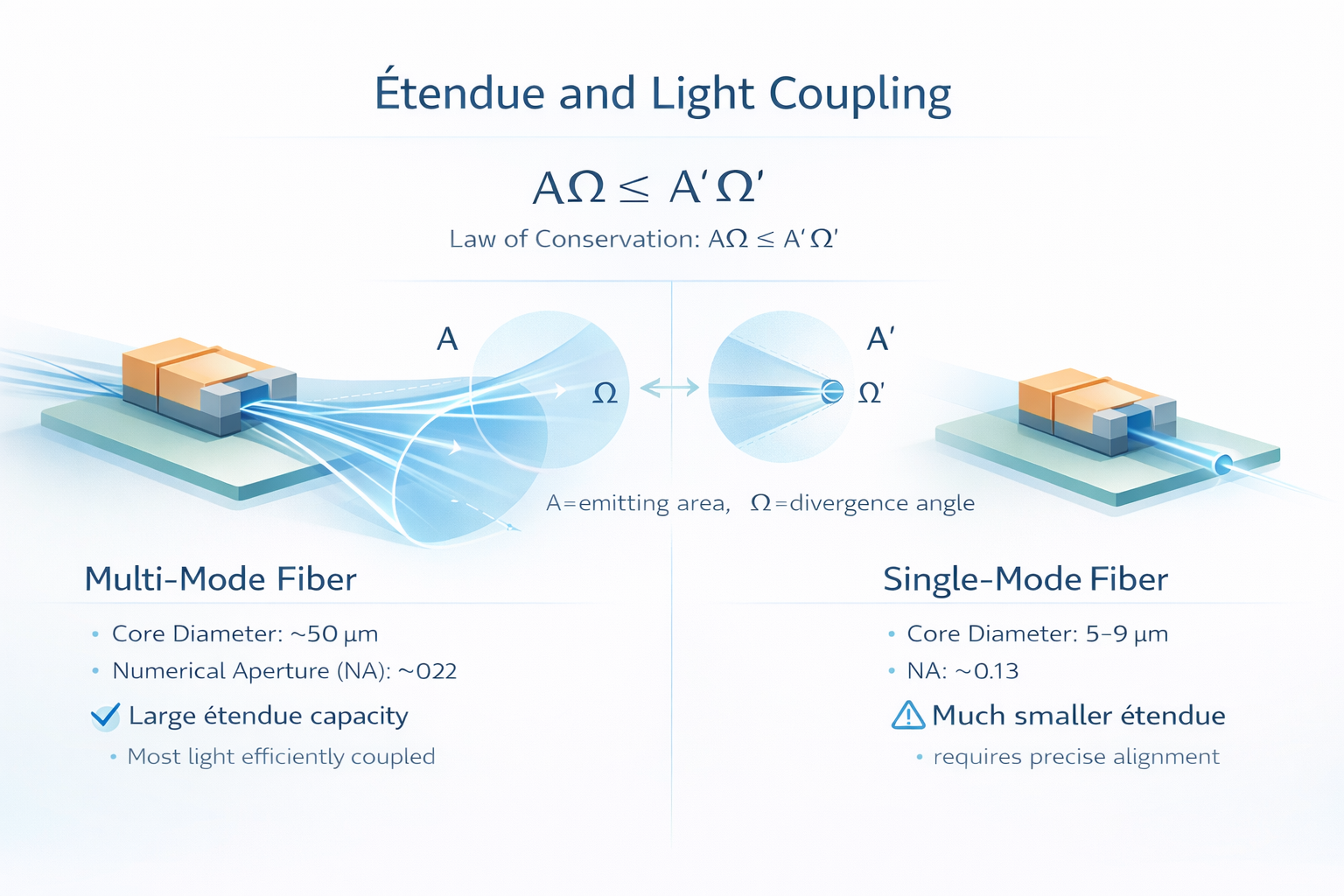
In optical system design, a fundamental concept called étendue (ε) describes how “spread out” light is in terms of both area and angular divergence.
It follows the law of conservation:

Where:
- A = emitting area
- Ω = divergence angle
The product defines how much light can be efficiently transferred from a source into a fiber.
Multi-Mode Fiber
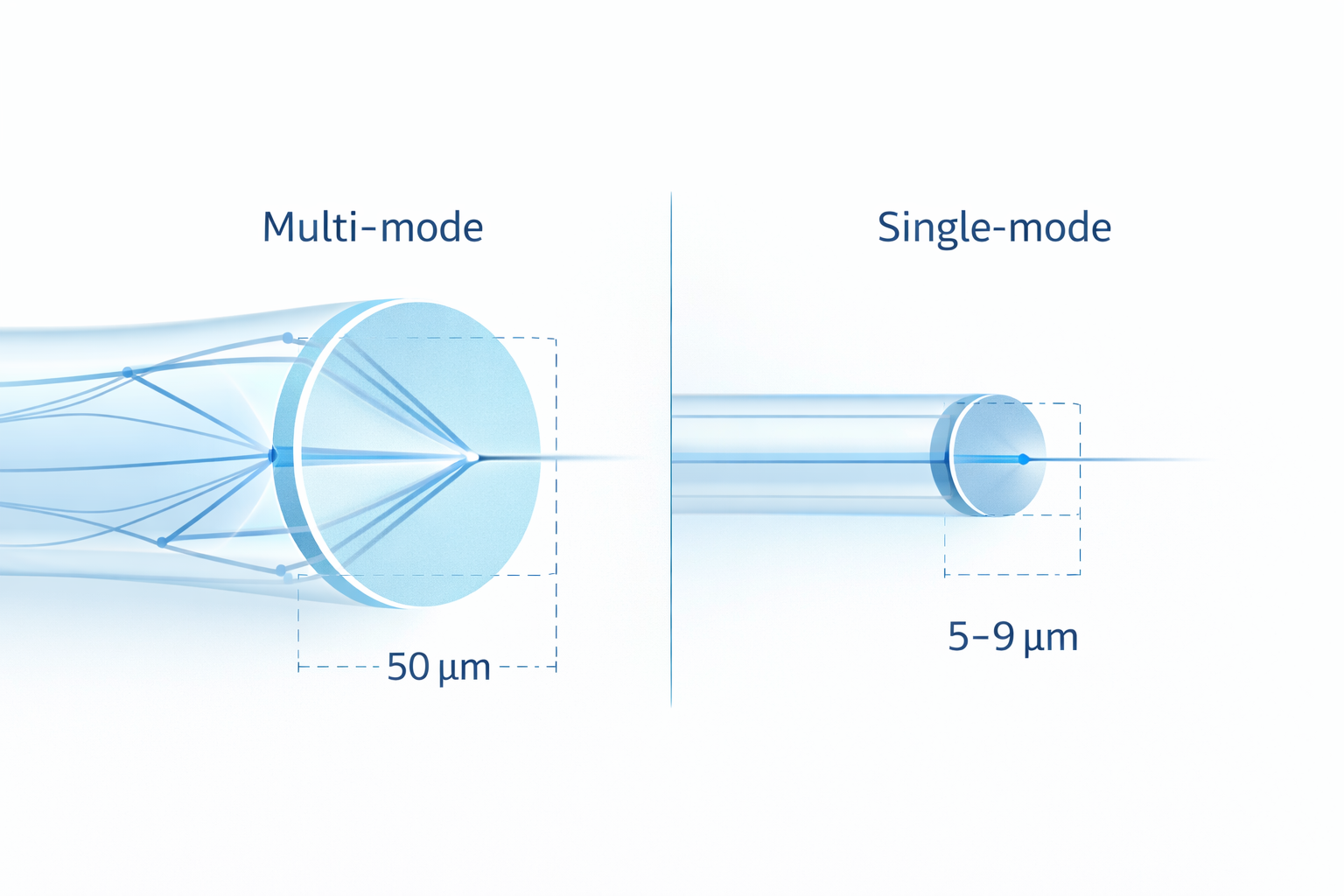
- Core diameter: ~50 μm
- Numerical Aperture (NA): ~0.22
- Large étendue capacity
This allows most of the VCSEL’s emitted light to be efficiently coupled into the fiber.
Single-Mode Fiber
- Core diameter: 5–9 μm
- NA: ~0.13
- Much smaller étendue
This restricts how much light can be accepted and requires extremely precise alignment.
Manufacturing and Alignment Tolerance
In large-scale AI infrastructure, manufacturability is critical.
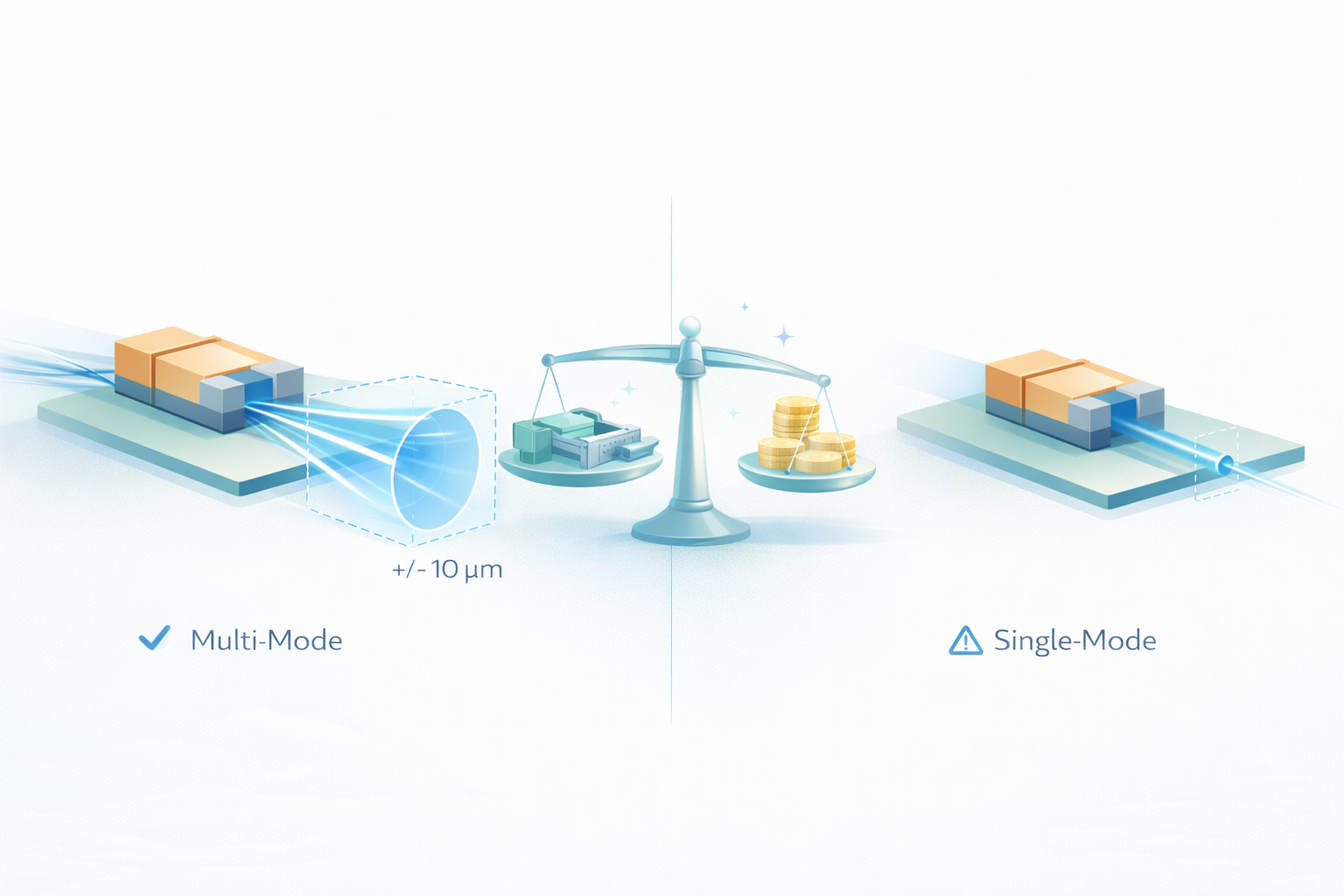
Multi-mode systems allow:
- Alignment tolerance up to ±10 μm
- Passive alignment possibilities
- Scalable injection molding or glass master-mold lens fabrication
Single-mode systems, however, require:
- ±0.5 μm alignment precision
- Tight mechanical control
- Higher cost assembly processes
To achieve >85% coupling efficiency in single-mode systems, alignment deviations must be nearly microscopic.
Why This Matters for AI Data Centers
Scale-up AI architectures demand:
- High bandwidth density
- Reliable optical coupling
- Manufacturable volume production
- Cost-effective deployment