

Silicon Photonics PIC vs. VCSEL-Based PIC
 As AI data centers scale, the architecture of optical interconnects becomes increasingly important. Two major approaches are commonly considered: silicon photonics-based photonic integrated circuits (PICs) and VCSEL-based PIC solutions. While both aim to enable high-bandwidth optical communication, their system complexity and manufacturability differ significantly.
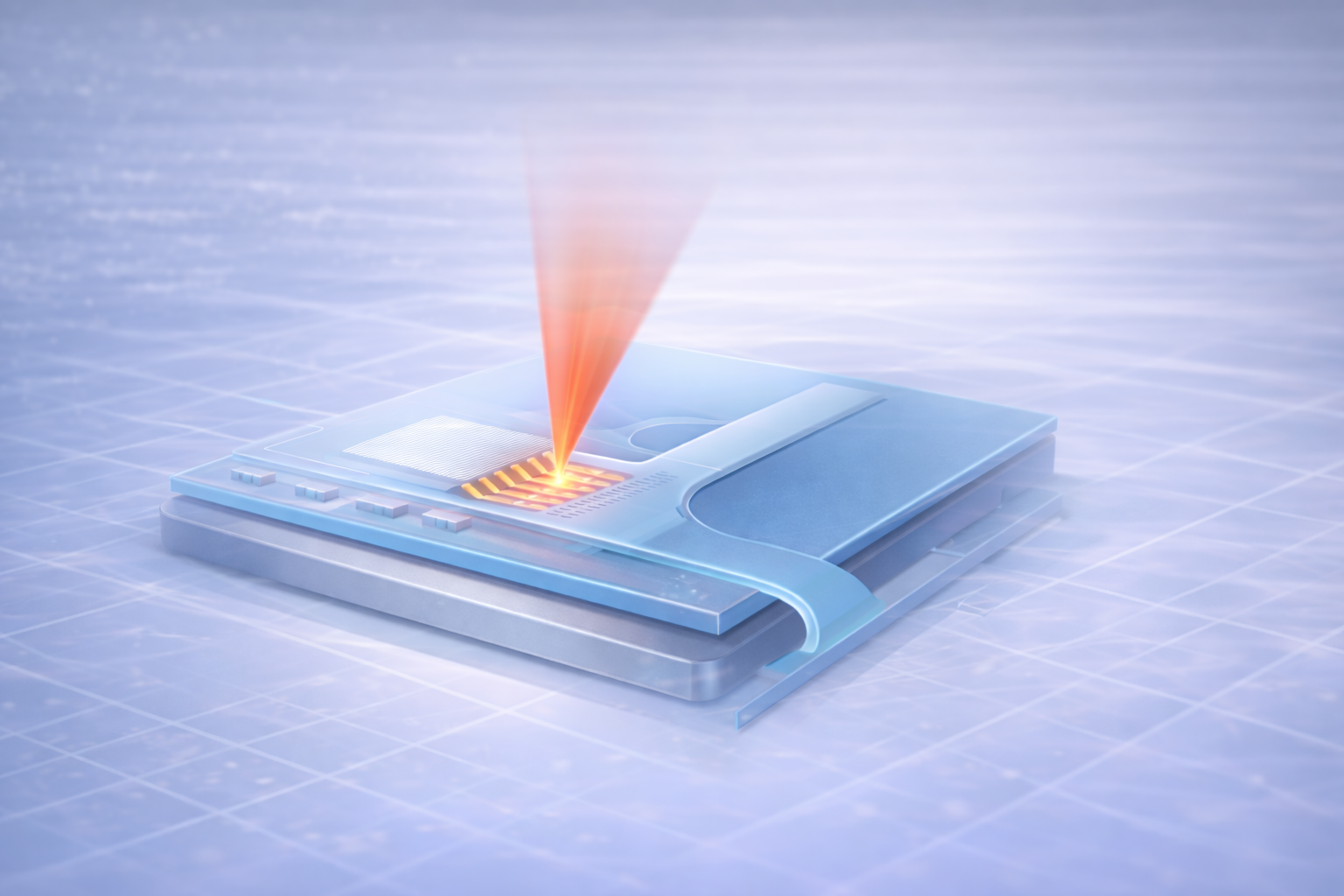
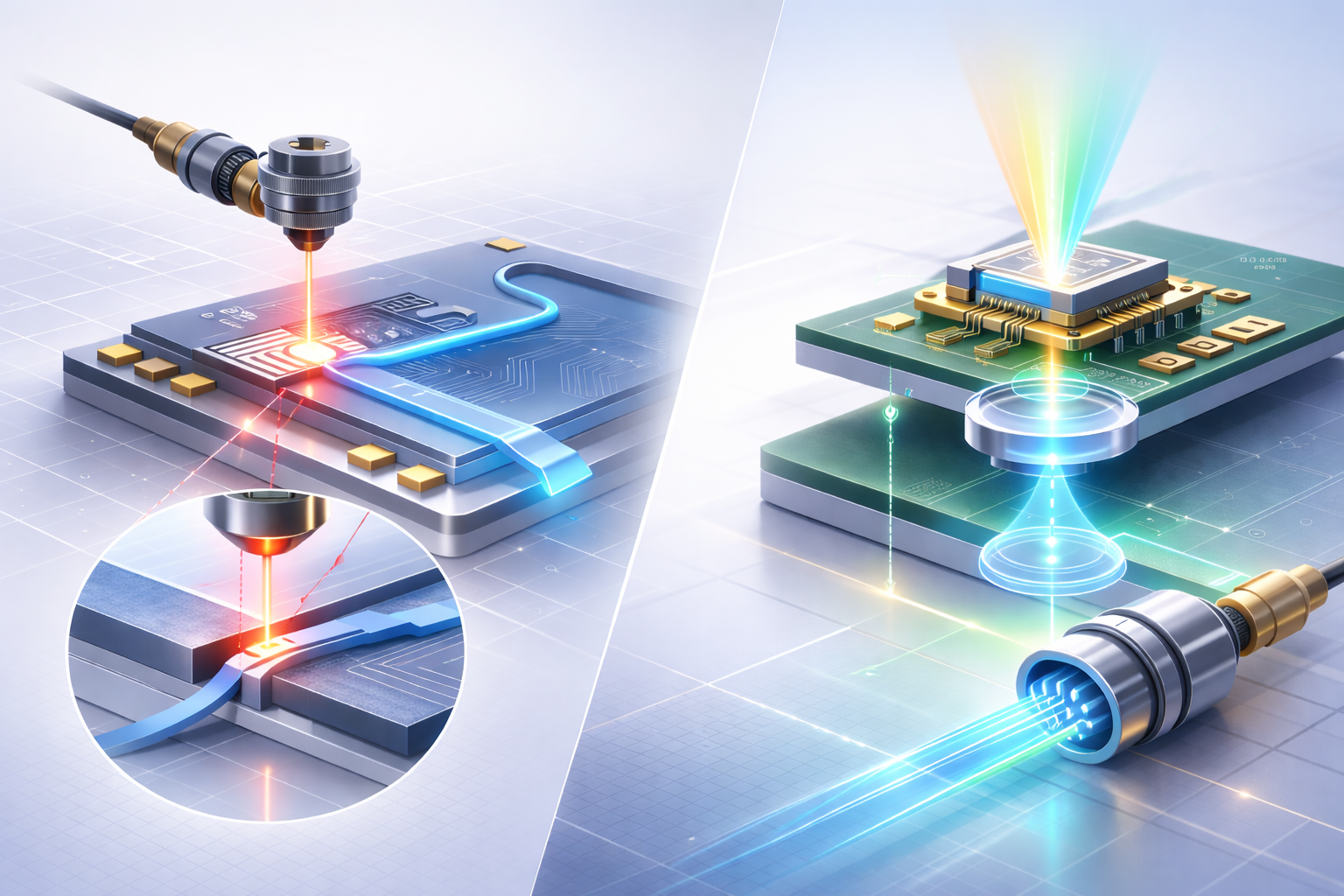
Silicon photonics PIC systems typically rely on either grating coupling or edge coupling to inject laser light into silicon waveguides. Grating couplers direct light from above into a waveguide through a patterned surface structure. However, this approach is limited by moderate coupling efficiency—typically around 55%—and requires specific polarization and angled incident alignment. In addition, grating structures inherently restrict multi-wavelength flexibility, making wavelength scaling more complex.
Edge coupling improves some of these limitations by aligning the laser directly to the edge of a tapered silicon waveguide. This design supports wavelength division multiplexing and reduces polarization sensitivity. However, the alignment tolerance required for fiber array coupling is extremely tight, often at sub-micrometer precision. Such requirements significantly increase packaging complexity and reduce manufacturability at scale.
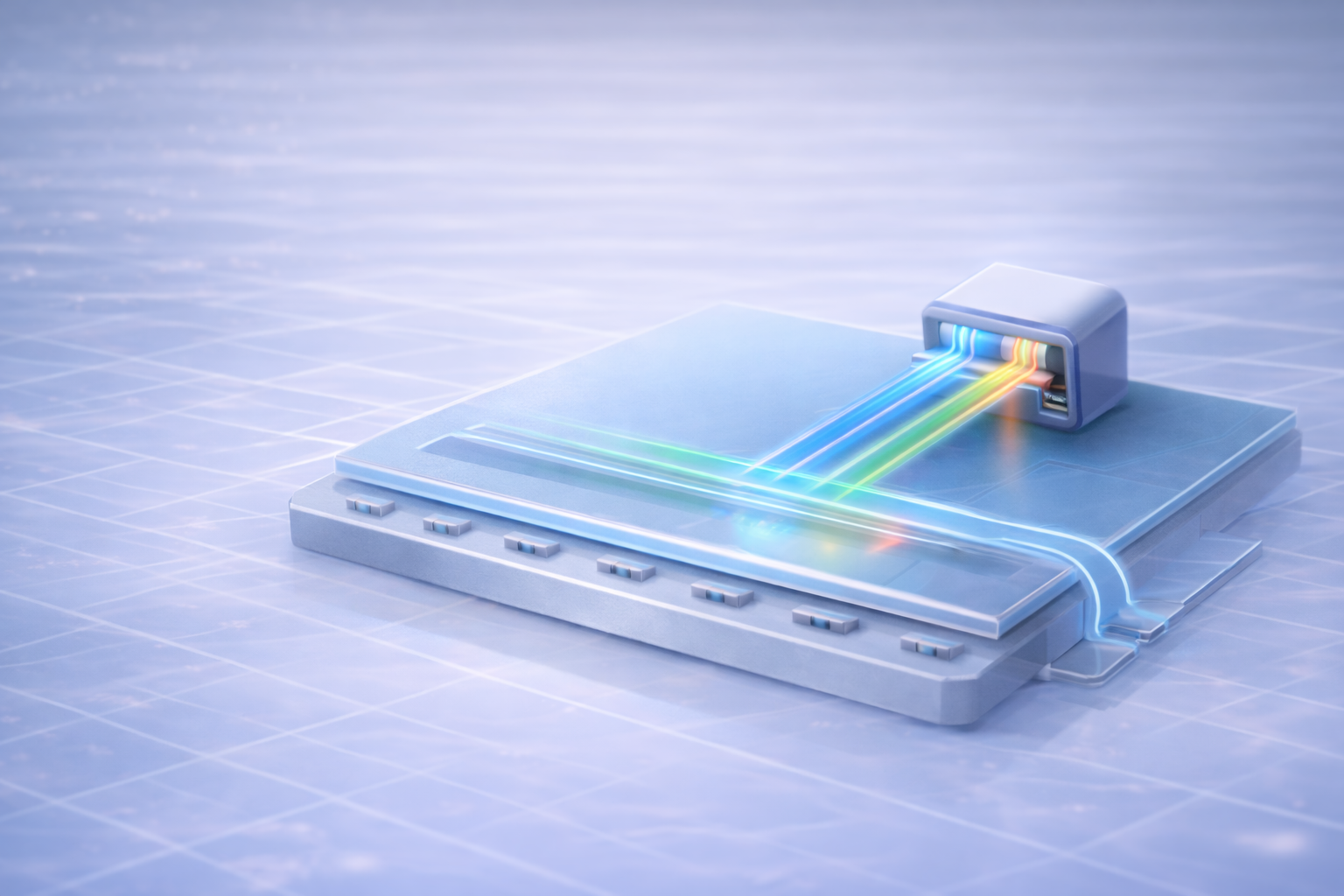
In contrast, VCSEL-based PIC architecture offers a more direct and manufacturable optical path. RVi’s Rite-VCSEL, with its thin ~20 μm structure and compact footprint, enables precise mass transfer onto flip-chip packages. Optical coupling is achieved through a straightforward laser-to-lens-to-fiber configuration, reducing structural complexity compared to silicon waveguide-based coupling.
Because VCSEL-based systems operate effectively with multi-mode fiber, alignment tolerances are significantly more relaxed. This allows scalable manufacturing using mature optical components. Coarse wavelength division multiplexing (CWDM) can also be implemented using miniature coated prisms to combine multiple wavelengths into a single multi-mode fiber and separate them at the receiver side.
For scale-up AI data centers, where bandwidth density, manufacturability, and deployment efficiency are equally critical, VCSEL-based PIC solutions provide a balanced approach. By leveraging mature manufacturing ecosystems and relaxed alignment requirements, this architecture delivers practical scalability for next-generation AI infrastructure.