

依據歐盟施行的個人資料保護法,我們致力於保護您的個人資料並提供您對個人資料的掌握。
按一下「全部接受」,代表您允許我們置放 Cookie 來提升您在本網站上的使用體驗、協助我們分析網站效能和使用狀況,以及讓我們投放相關聯的行銷內容。您可以在下方管理 Cookie 設定。 按一下「確認」即代表您同意採用目前的設定。
Insights
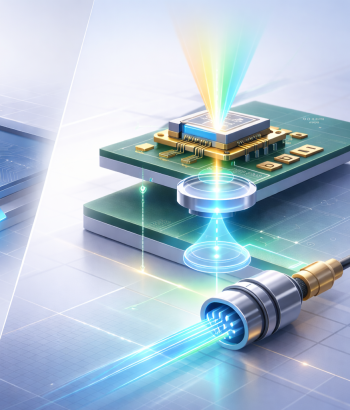
Silicon Photonics PIC vs. VCSEL-Based PIC
As AI data centers scale, the architecture of optical interconnects becomes increasingly important. Two major approaches are commonly considered: silicon photonics-based photonic integrated circuits (PICs) and VCSEL-based PIC solutions. While both aim to enable high-bandwidth optical communication, their system complexity and manufacturability differ significantly.
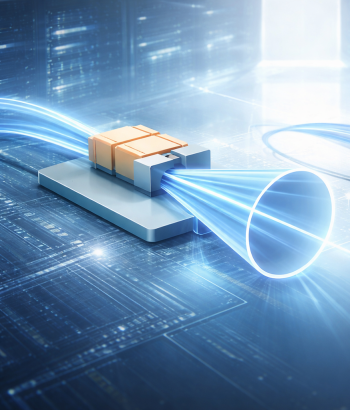
Why Multi-Mode Over Single-Mode in Scale-Up AI Data Centers?
The law of conservation of Entendue (ε). In the design of a VCSEL, the importance of the aperture size and the divergence angle will significantly impact the overall design of the optical system linking the VCSEL to the photodiode.
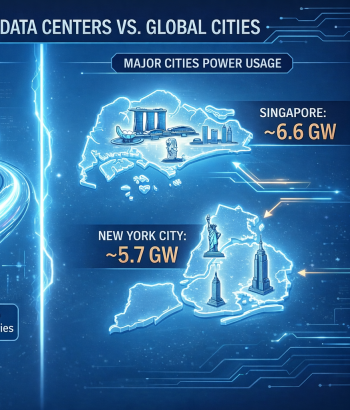
AI is an Energy Consuming Monster
Few years ago, a hyperscale data center consumed about 50-100 Megawatts (MW) of power. While tech giants today, like Microsoft and Google are planning gigawatt-scale clusters. The Stargate project proposed by US government is forecasting a power requirement of up to 10 Gigawatts (GW).

The Industry’s Need to Reshape Optical Fibers for Scale-Up AI Data Centers
In the emerging scale-up ecosystem, the shift from current active electrical cables (AECs) are shifting to using optical cables to replace this market space due to the improvements in bandwidth density and reach.

Why AI Is Slowing Down — And It’s Not a Computing Problem
Modern AI models, such as ChatGPT or Gemini, have grown so massive that they cannot fit into the memory of a single GPU. If the connection performance between them compromises, the entire supercomputer slows down.

Why AI Interconnects Are Moving from Wide & Slow to Narrow & Fast
As AI workloads scale, bandwidth and power efficiency are becoming the defining challenges of data center interconnects.
This article explains why the industry is shifting from “Narrow & Fast” to “Wide & Slow” architectures—and how RVi’s XmartLink™ makes that shift possible.