
AI-driven measurement systems
The AI-driven measurement system is a measurement solution specially designed for MicroLED and MicroVCSEL manufacturers, effectively overcoming the limitations of traditional measurement. In the development of microdisplay technology and the optical communication industry, process yield and production efficiency are key indicators determining market competitiveness. RVi's AI-driven measurement system incorporates advanced AI algorithms, aiming to break through the limitations of traditional measurement techniques and provide manufacturers with cost-effective and high-precision smart manufacturing solutions.
The core advantages of RVi AI-driven measurement systems
Traditional advanced measurements, such as electroluminescence (EL) or AC (AC) testing processes, often face time-consuming challenges and significant equipment investments. To address this pain point, this system offers the following three core technical advantages:
1. Significantly improve production cost efficiency: Measure and derive high-level data at low cost
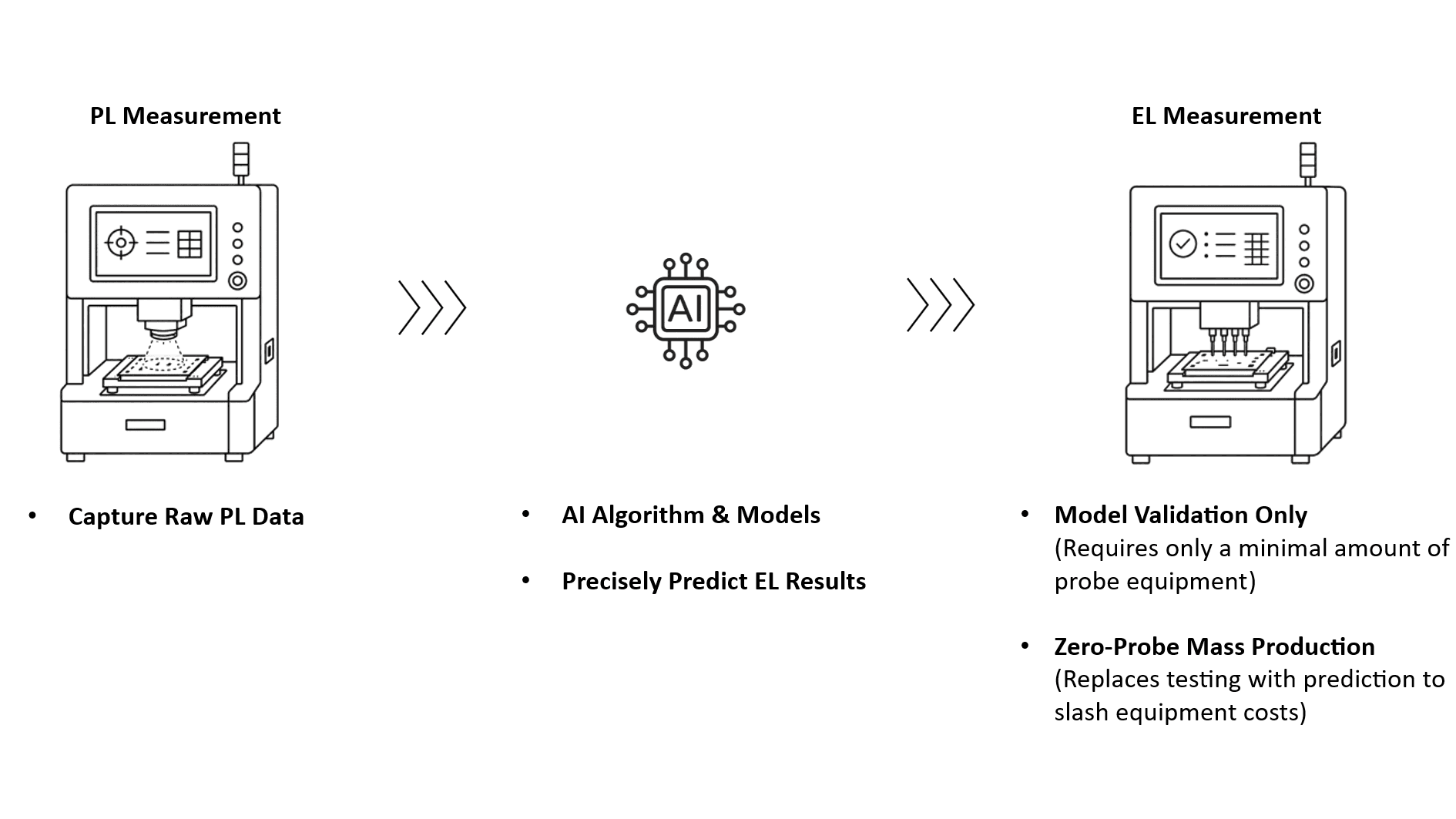
By training a well-developed AI model, this system is capable of accurately predicting high-end EL or AC test results from low-cost and fast photoluminescence (PL) or direct current (DC) test data.
-
Significantly reduces reliance on expensive and time-consuming high-end testing equipment, effectively lowering overall production costs and significantly shortening production cycles.
-
100% inspection of grain optics and AI algorithms to accurately predict the photoelectric characteristics of each chip.
-
Unlike the potential grain damage caused by contact sampling detection by spot testers, the AI algorithm uses PL to perform non-contact inspection of individual chip chips, ensuring no grain damage during the inspection process and causing losses.
Traditional MicroLED inspection process:

RVi AI-Driven Measurement System:
2. Optimized measurement accuracy: automatically corrects system deviations and noise
In practical operation, measurement equipment inevitably generates data bias and noise. The built-in AI model in this system not only has data prediction capabilities but can also proactively identify and correct aforementioned data anomalies.
-
We ensure that the data provided for subsequent manufacturing processes is highly accurate and reliable, thereby comprehensively improving the yield and quality stability of the final product.
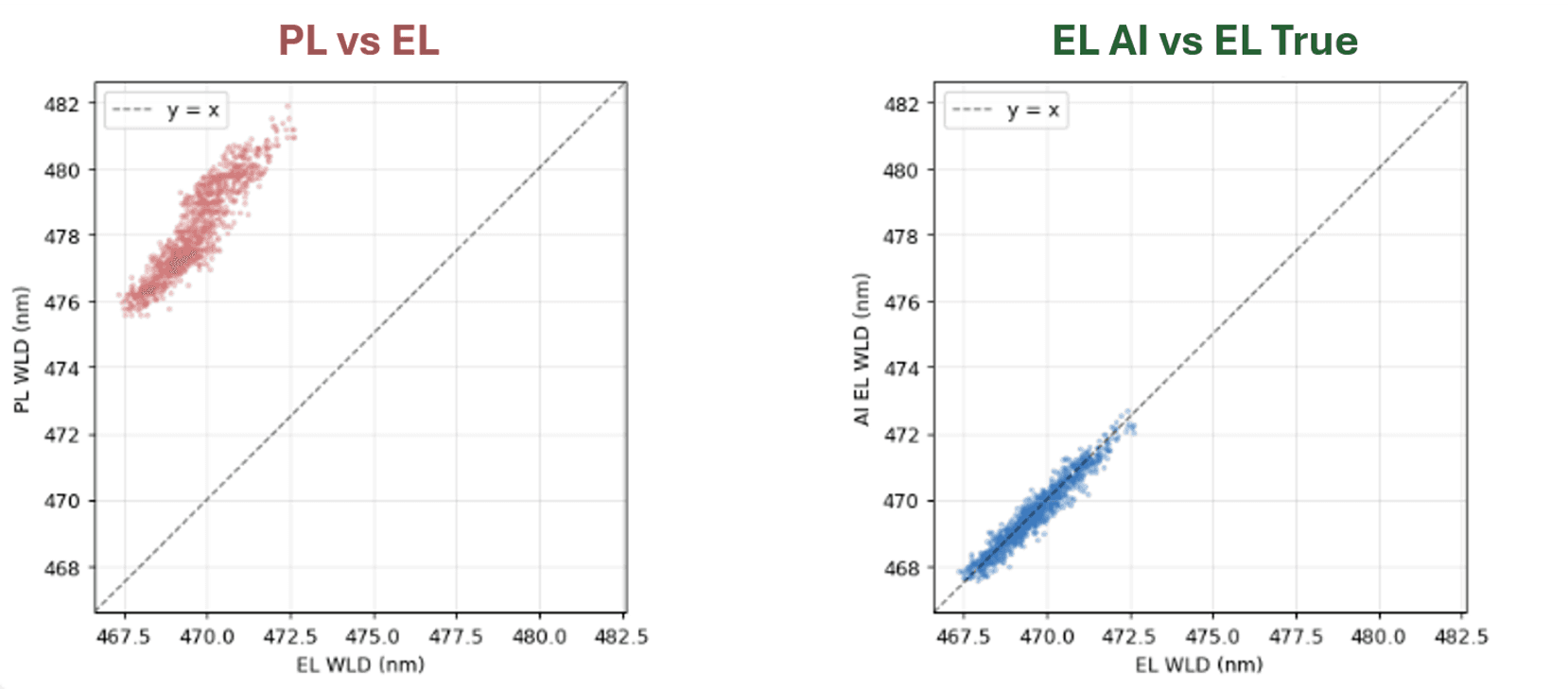
RVi model uses PL data to predict EL wavelengths
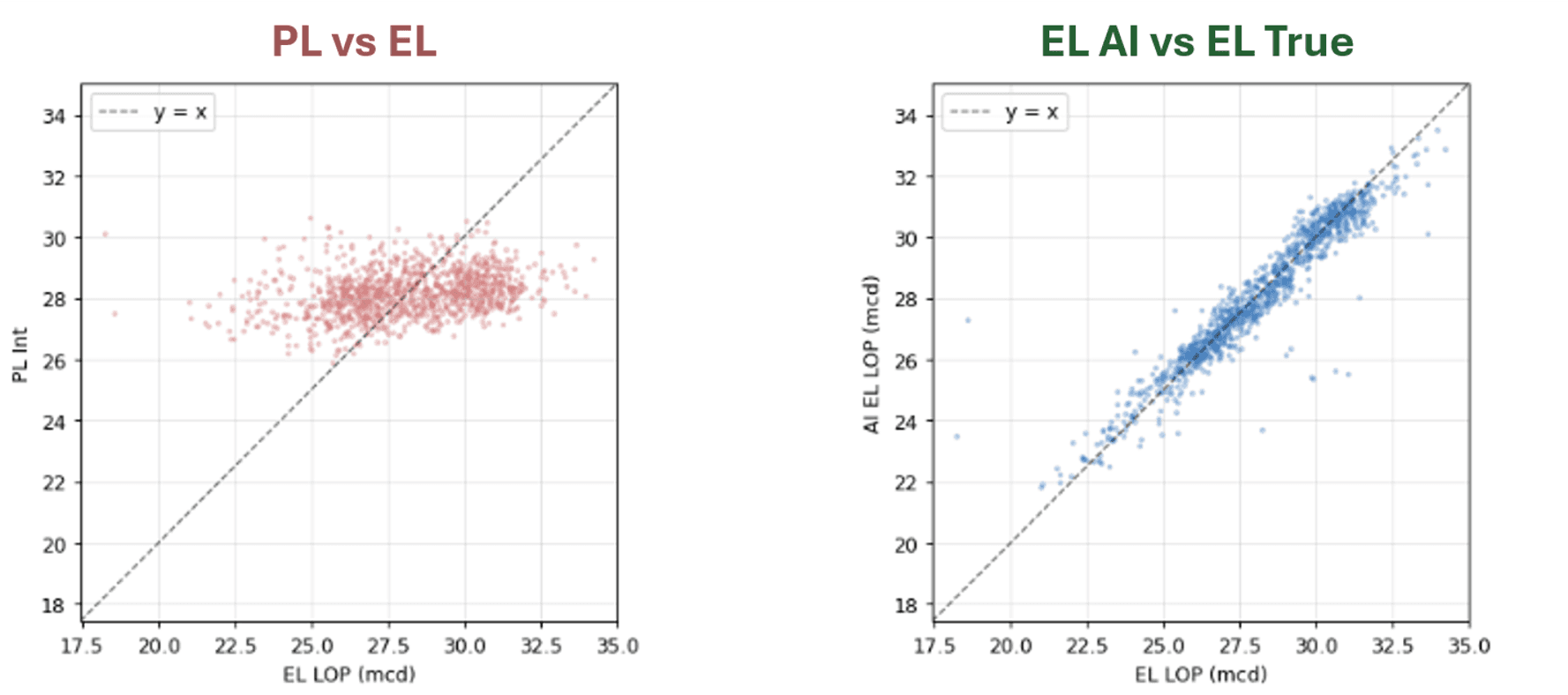
The RVi model uses PL data to predict EL luminescence intensity